Angels Falling
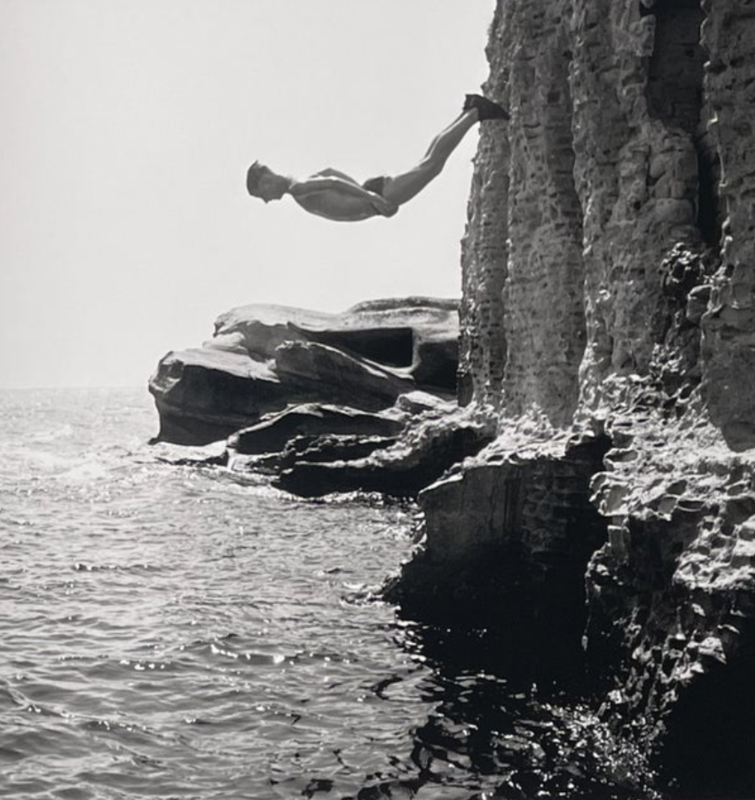
A word until recently unknown to me is ‘tombstoning’ — the act of leaping off a high rock into the sea. It’s called this because you are supposed to jump with arms and legs straight down, thus resembling a tombstone, though other postures are available. Another implication of the word is that you could end up dead.
Seeking a thrill is part of our human mentality but most of us make sure we are strapped in, hooked up, well padded and helmeted first. So we feel the thrill with the minimum of risk. The risk of the sea, though, is often underestimated as the numerous tombstoning fatalities prove. It is the same with seemingly quieter waters — rivers, ponds, flooded quarries — which, despite the warning signs, claim young lives in the heat of every summer..
*
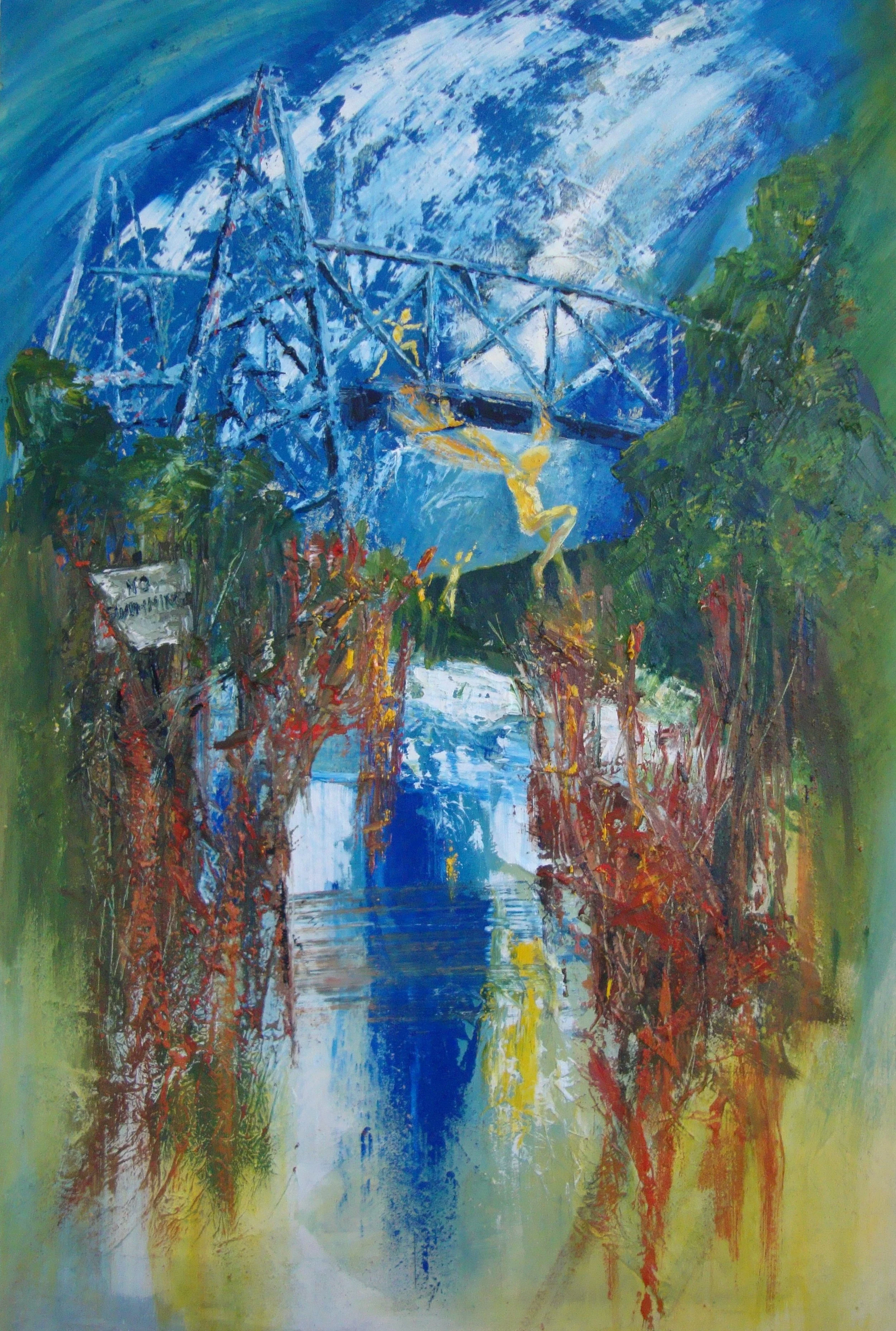
Another time, another place. The edgelands of a northern town. A murky river winds through the desolate post-industrial wasteland. At one point the river is spanned by a tall bridge of blue steel which once bore fat metal pipes carrying slurry from the nearby power station to be deposited in murky lagoons. Now the bridge is part of a footpath network. It is also an ideal structure to jump from.
The Blue Bridge
…whose ice steel intersections score
grey winter skies
where it spans the river, its cold
geometry connecting
the allotments to the edgelands,
that territory of osiers
and shallow birchwood
rooted in old shafts, fed on ash --
spent workings,
ground dislocated and bereft.
Crossing, you stop and shiver, peer
into the sliding current
that trawls the strewn margins, sucks
rank reedbeds
and gravitates towards the weir.
Then think of summer, when the boys
come off the estate
to lounge on the warm bank smoking
and drink, scattering
their tins by the ‘No Swimming’ sign.
Till, fired by sun and cheap lager,
they strip and mount
the bridge, scaling the struts, balance
on the blue edge
to stretch out their pale, skinny arms
and leap, reach up then die, arrows
flicking flakes
of sunlight off, angels falling,
drowning, until
dark waters thrust them back again.
*
The lager plays a part, but it’s mainly bravado and the reckless risking of youth which believes it can never die. They are etching their courage, pointless though it is, into the folklore of their tribe.
Now, up here, though surrounded by the sea we do not have tall overhanging cliffs to jump from…but we do have the harbour. Decades ago, fights between the ‘town’ boys and their less sophisticated brothers, the ‘harbour’ boys, were a frequent occurrence. The descendants of the harbour boys still gather on the harbour walls when the tide is in to display their prowess.
DANGER ‘No Diving’
The boys are leaping off the harbour wall,
shivering in their cold, blue skin.
Their girls huddle in thin coats and smoke.
Kittiwakes jeer from the castle ruins.
Gulls whine overhead. The law
is out of reach or lolls in the shadows
looking the other way.
They catch their breath, stiffen their sinews,
then take their fledgling plunge, taste
the fatal sweetness of blind risk.
Bony boys leaping, fallen angels,
off the edge of the world.
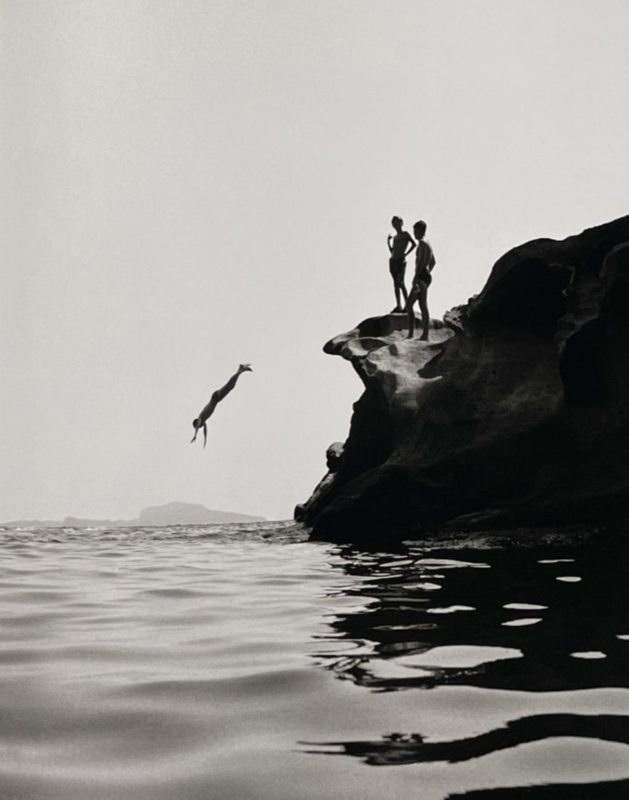
It will be noted that both poems liken the leaping youths to angels (a subconscious repetition on my part) They fly through the air like angels of course, but since they are wingless they are falling angels who then, by a swift sleight of grammar, become fallen angels with all that implies. Virtue and innocence lost, either, in those unfortunate cases, by falling fatally to their doom, or dramatically enacting our common fall from whatever grace we had to start with, expelled from the gallery of the righteous to the standing room only of the pit, where we jostle with the rest of the groundlings — the sinful, the silly, the careless, foolish, mad, and the reckless. Who can blame the youth who launches himself, tombstone fashion, from a tall rock in a desperate bid to fly?