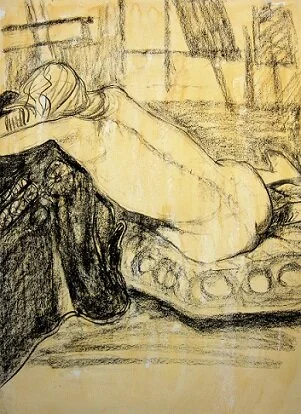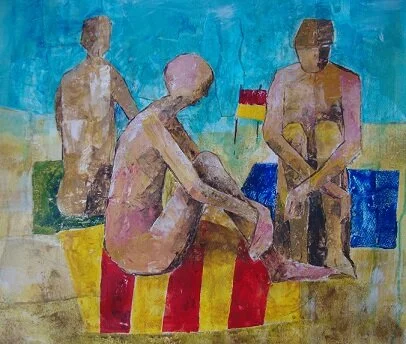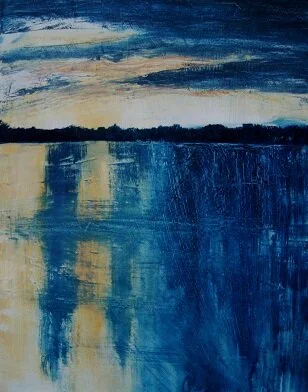
Swim
One consolation during our present straitened circumstances is that the swimming pool remains open. Things are different, of course. No longer just turning up when you feel like it, no longer the frothy din of squealing kids as they shoot down the water-slide or somersault from the poolside, no longer trying to steer a course through the ball games and plastic floats. Now, having booked in advance, you enter the sanitised calm of the pool with its carefully spaced lanes and roped off ‘tanks’ for small family groups to play in. There are two broad swimming lanes, one called simply ‘Slow’, the other ‘Medium’, but with the tag, ‘Fitness’, Which one you opt for — and there are instructions accompanied by cartoon figures, presumably for those who can’t read — depends on whether you swim with your head above water or below. The slow lane is usually occupied by elderly ladies rotating serenely clockwise, perms and spectacles clearly above the water. In ‘Medium: Fitness’, muscly, begoggled men thrash their way back and forth and serious women in bathing caps exhale loudly as they execute their crawls and backstrokes. I tend to opt for the slow lane.
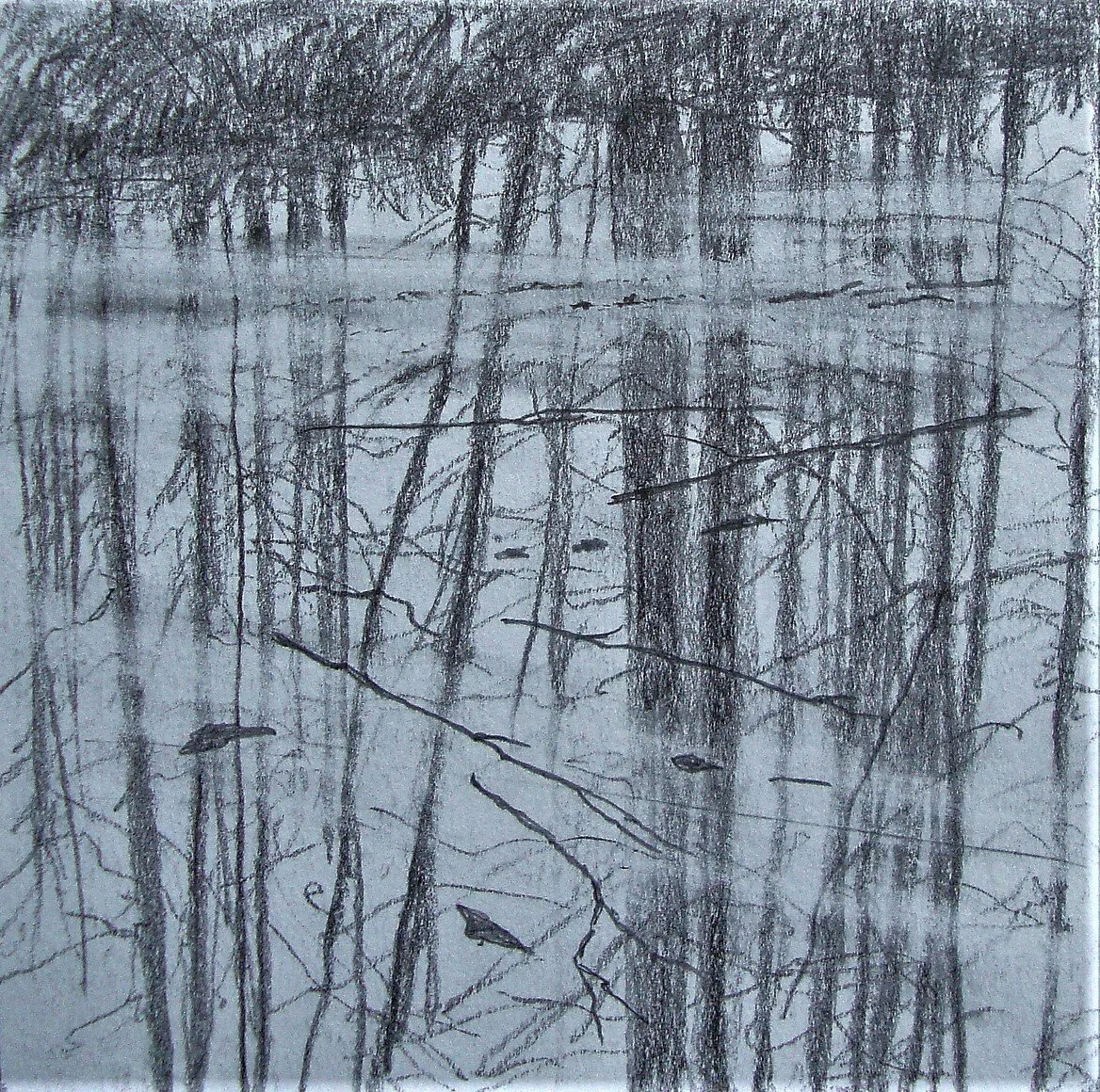
From a series of Water Drawings….
*
I am five years old. We live on the farm where my father works. The owners live in a large red-brick house across the track from our little cottage. In their extensive garden is a swimming pool and one day we are invited to go and play in it. My sister and I are friends with the children of the Big House. This I remember. I am in the pool. One of the farm hands is inflating an old tractor tyre inner-tube to serve as a buoyancy aid. He flings it into the water. It clouts me on the head and I go under. Things go strangely quiet and a stream of silver bubbles floats slowly by. I come to, wrapped in a towel and sitting on someone’s knee. My sister and the children from the Big House splash around merrily in the pool. I have nothing more to do with swimming pools for another forty years.
Sea water also was an unusual and distant element. Perhaps on a rare Saturday we would drive down to the coast — Littlehampton or Bognor. My parents would sit in deck-chairs half asleep while we played in the sand. Occasionally my father would rouse himself, roll up his trouser bottoms and take us to paddle cautiously at the water’s edge.

Water 2
*
The Greek philosopher, Heraclitus, round about 500BC famously said, ‘You never step in the same river twice’. I can’t recall ever stepping in a river once, not in my youth anyway, but what he meant was that the river, like everything else, is in a state of constant change and motion and, just as importantly, so are we. The river is a symbol of the continuum, the endless flux of life as it morphs and evolves. Marcus Aurelius said, ‘for substance is like a river’s unending flow’. And, away from the water-slides and diving boards, the attraction of swimming is to immerse yourself in this element, so other and yet so much part of you, and thus subsume yourself in the flux and flow of existence.
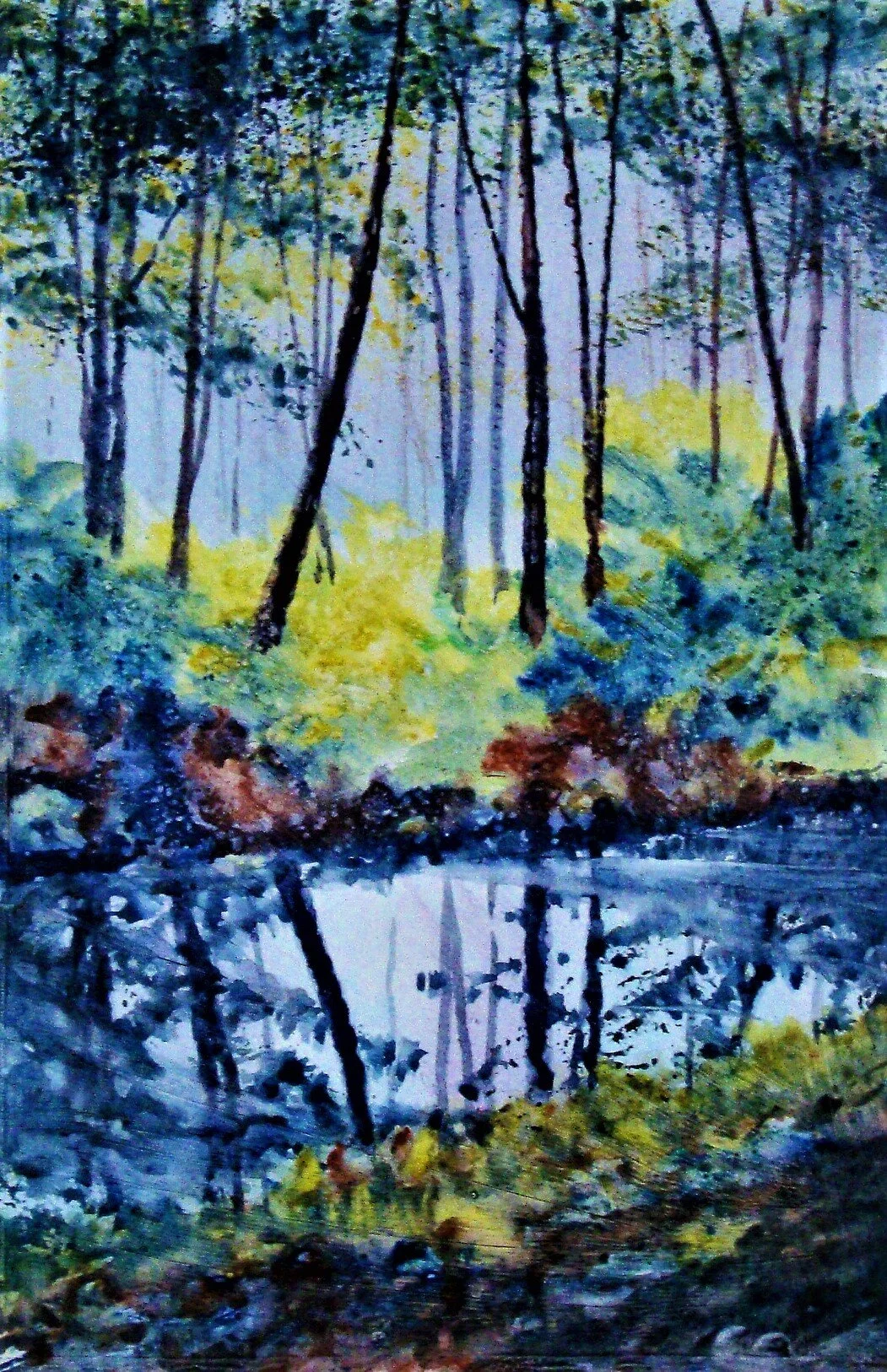
River
*
It was when our children were growing up and had learnt to swim through school lessons that I felt it a great shortcoming that I couldn’t join them in the pool. I do not remember any mention of learning to swim either at home or at school when I was a youth. So it was that when I was about forty-five I enrolled in an adult swimming class at a pool in the local secondary school. I invested in some trunks. In those days men wore ‘Speedos’, rather skimpy items now roundly mocked unless you happen to be a Tom Daley. We emerged nervously from the changing rooms at the first session to be met by a short, thick-set man with a moustache and spectacles. He was ex-military and had been an instructor in the army. He immediately ordered us to stop dithering around and jump in the water. One or two brave souls leapt at his command but the rest of us slithered unconvincingly down the side of the pool clutching for support wherever we could. He then told us to get out and jump in again….and again, and again. This turned out to be his unbending method of instruction: simple repetition of each activity, accompanied by ever louder exhortations, until we showed some signs of achievement. For my part, my initial dread of going under — I still remembered those silver bubbles floating by — gave way to sheer, bloody-minded determination to do as the man said and move on. Somehow or other, by the end of the ten week course we could all just about swim. I took to going to the local pool and, after one or two tentative efforts at doing a breadth, I suddenly realised I could swim.

Water 3
*
Water has always had a powerful religious significance. Thousands of Hindus flock to the holy River Ganges every year to immerse themselves in its waters in an act of ritual purification. Ironically, it is one of the world’s most polluted rivers. Baptism, either by a damp cross planted on the forehead by a timid priest or by a complete dunking, sets you on a path to the Almighty. And Philip Larkin, whose attitude to religion was ambiguous to say the least, wrote,
If I were called in
To construct a religion
I should make use of water.
His last verse goes,
And I should raise in the east
A glass of water
Where any-angled light
Would congregate endlessly.
This points towards a universal inclusivity in the spiritual significance and succour of water. After a good swim, or even a shower, you feel as though it is not only your body that has been rinsed.
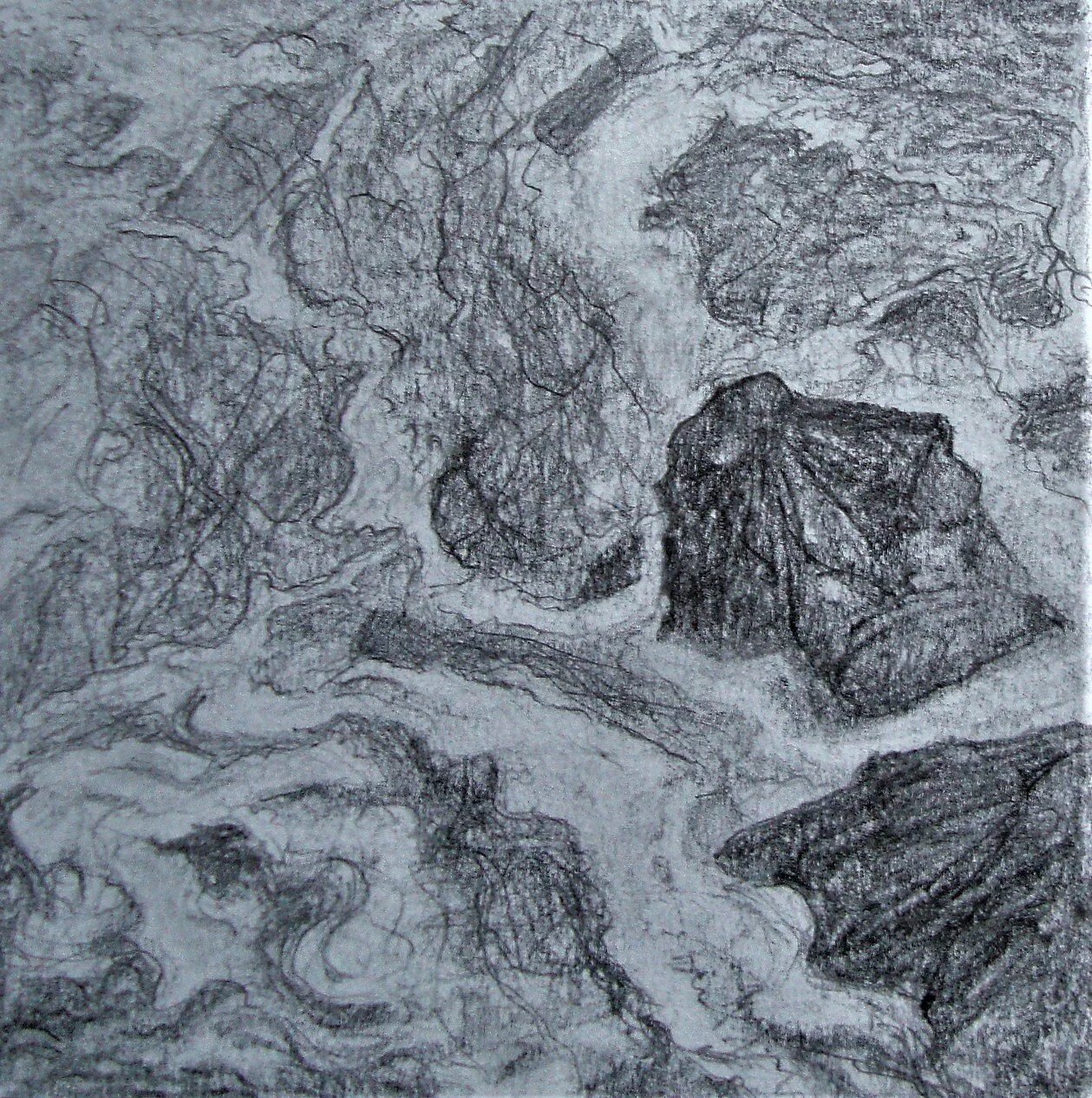
Water 4
*
It is summer and i have booked a cheap flight to Corfu. It is a midnight flight from Manchester which I share with a crowd of young merrymakers on their way to Kavos. Two and a half hours later I step down onto the tarmac in Kerkyra, into the warmth and the heady, lemony smell of herbs. I take a taxi to the bus-station and sit in the cafe with a strong black coffee and a little biscuit. I haven’t booked anywhere but am going to try my luck over on the west coast. I pay my fair to Agios Stefanos. The three hour journey takes me through the hills and little villages of the north of the island. It is punctuated by frequent stops as the driver gets out for a smoke and a chat with some friendly farmer or builder. We arrive at Agios Stefanos and I head for the tourist bureau where I meet Nula. ‘Is there anywhere I can stay?’ I ask. She smiles and picks up the phone. After a few enquiries she says, ’Go and sit on the step and she will come.’ This I do and roll myself a cigarette in the hot midday sun. Soon a battered car slides to a halt and a stout, cheerful looking woman gets out. She goes inside, no doubt to chat to Nula. Time, as I realised on the bus journey, is a highly flexible concept in Greece. Eventually, the woman reappears and bids me get in the car. We drive at a reckless speed to a block of apartments at the far end of the town. She installs me in one, we agree terms and she goes. I have arrived.
Agios Stefanos has a beautiful broad beach, but I read in my little guidebook that there is an even better one over the hill in Arillas. I pack a few things and set off on the hot, stony path, pass a little wayside shrine at the top, then descend to the shining crescent bay below me. At a store on the shore I purchase a beach-umbrella and a large nectarine. A scattering of folk on the beach…. sunbathing, sitting smoking, reading, swimming, and I see that none of them has a stitch of clothing on. There is nothing for it but to join them — why, after all, encumber yourself with a few inches of cloth in the heat of a day like this with the blue-green sea awaiting?
Swimming in the azure waters of the Ionian Sea off the coast of Corfu remains one of the great pleasures of my memory — the wonderful buoyancy of the salt sea, the complete immersion not just in the cool water but in the senses and in the moment. When I get out I notice a group of men, women and children who seem to have found a supply of mud in a little creek among the rocks and are busily smearing themselves in it. I stop by a large, middle-aged lady vigorously slapping the stuff on her body and ask her the reason. In a heavy German accent she replies, ‘Is gut for skin, for organs, for life!’. She gestures to her bucket of mud as if to invite me to have a go. Somehow, at this point, my sense of adventure deserts me and I politely decline. I return to my beach-umbrella, sit in its shade and eat my nectarine.
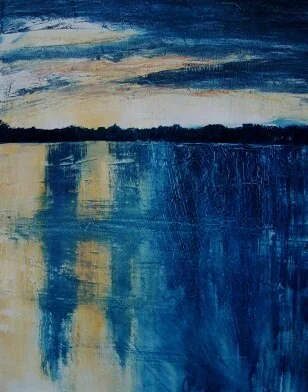
Night Swimming
Later though, I meet up with the mudlarks again in the cafe on the beach. The large woman recognises me and beckons me over to join her party. Luckily they speak good English and a convivial evening is spent with spirited conversation and plentiful supplies of lager and retsina. As night falls they announce a last dip in the sea. This time I do not resist…..
….to go night swimming when
the inky Ionian slides into the sky,
to swim in the rich night
in liquid aquamarine with
sea-jewels, sapphire and gold,
to be glazed by the cool current,
my turns and flicks and twists just
gestures in the dance of the waves,
to surrender to this other that
sleeves me and enslaves me,
embracing and escaping in one kiss,
to rise up, rinsed and weightless,
my skin skinned
and the deep night dipping
into a soundless sea…..,
*
Part of the current craze for wild swimming must be this feeling — not just the exhilaration of swimming outside with the sights, sounds, smells and tastes of nature around you, but the sense of connection with something deeper than the cares, the trivialities and anxieties of everyday life. I now live by the sea, a perfect place you would imagine for wild swimming. Not a Grecian sea, alas, but nevertheless a sea which washes up over some beautiful beaches. I here admit, to my shame, that I have not taken the plunge in these waters. On only one occasion have I managed more than a perfunctory splash and even then I must have only managed a dozen strokes before scrambling gasping back to the shore. The North Sea in these parts is just too bloody cold! I am determined to do it properly one day. I have heard, moreover, that swimming in cold water produces a protein which helps stave off dementia, which might be worth remembering as the years advance.
But for the time being, with winter coming on, I’ll content myself with the old ladies in the slow lane.

The North Sea