All is Flux
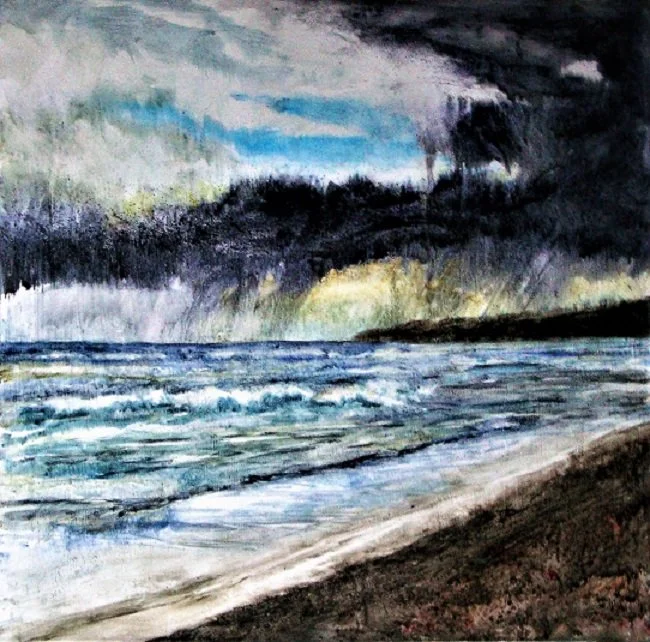
Stormy Sea
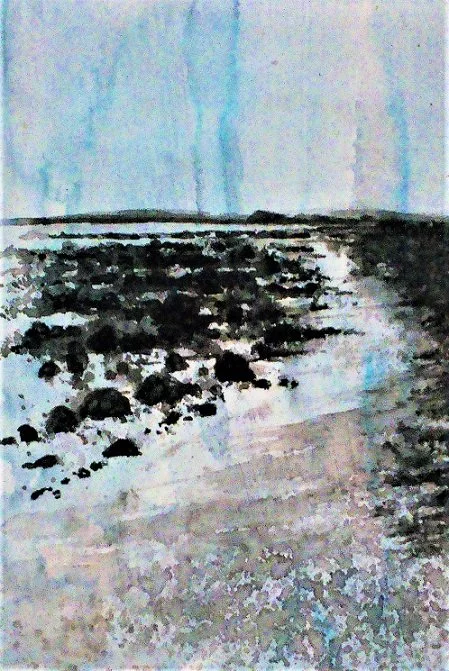
The houses along the bottom lane face the sea with all its wind and weather. There is always scaffolding, men building, repairing roofs before the next storm….
The Shore House
Two roofers stripping slates
from the shore house,
bare chested and tattooed,
luminous in the bright air,
their banter sharp as nails.
One crouches on the scaffolding
and lights up, exhales
a halo of smoke. The other climbs
the rigging of rafters, shades his eyes
and gazes out to sea.
Their moment in the sun,
fleeting as their fellowship.
Next time I pass the roof is gone.
Beyond, the waves,
forever coming on.
…forever coming on…that is what struck me first when I came to the sea, the way it keeps ‘coming on’ as it has done for millennia upon millennia, wave after wave, tide after tide, pushed and pulled by wind and weather, the moon, and the Earth’s tilt.
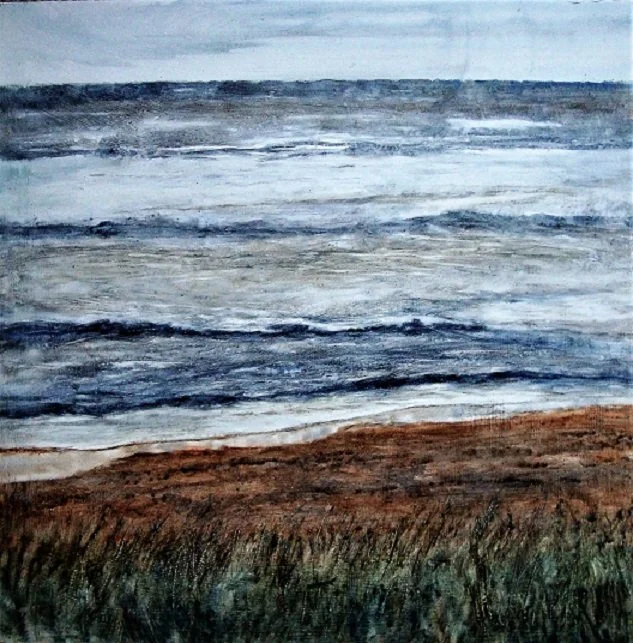
The waves coming on
*
The melancholy sage of pre-Socratic Greek philosophy, Heraclitus (fl.c.500BC) is best known for his saying, ‘You never step in the same river twice.’ It was walking by Langdale Beck, near Elterwater in the Lake District, that the truth of this saying hit me, and I didn’t need to step in the river even once. Just watching the agitated surface glittering over the dark undercurrent showed me that those restless molecules were never still, that all is flux as Heraclitus said. And that not only would the onward surge of the river have changed at the second stepping in but so would I.
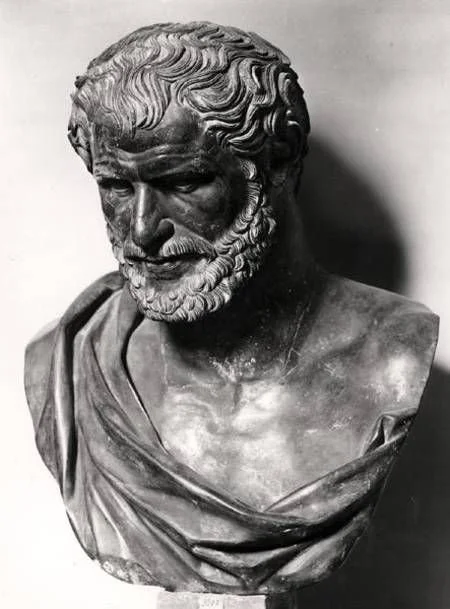
Heraclitus c535-475BC
Of course, the same goes for the sea, however calm or rough…it is in constant flux and flow. What I like about sage Heraclitus is not just to do with rivers but how that serves as an image for life itself and how we live it. Later philosophers, Plato and Aristotle, for example, have tended to seek through logic and reason absolute ideals upon which to base their version of truth. They have commonly appealed to the law of non-contradiction, an apparently sensible idea that contrary assertions cannot both be true, not at the same time anyway. Yet Heraclitus denied this law : ‘The way up and the way down are the same,’ he said. Contradictions and opposites are themselves part of the ever evolving flux of life.
*
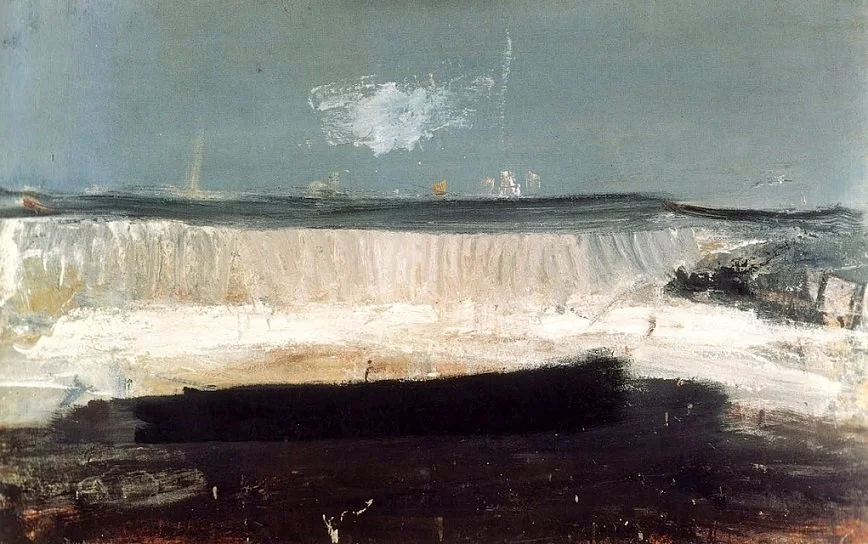
At this point, a painting by Joan Eardley (1921-63), ‘The Wave’, one of a series she did in 1961/2 from her clifftop post at Catterline on the N.East coast of Scotland. Her capture of the oncoming breaker is elemental.
*
Adrift
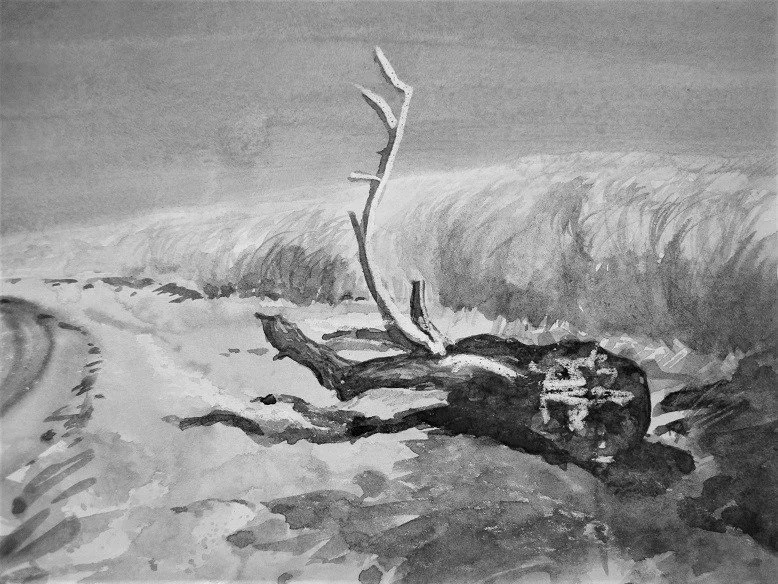
When I patrol the shore, there is driftwood, always –
a crate, a fencepost (wire still attached)
planks and pallets. And then,
the twigs, nests of sticks and weed,
broken branches, limbs of trees.
And sometimes a whole trunk, the torso of a tree.
Wet and wind gnaws at the bark, strips it away.
Salt and sun bleaches it to the bone.
I like driftwood. It’s like me,
washed up by tides and currents
on a random shore, adrift.
*
In our everyday lived experience our thoughts and feelings seem chaotic. To escape the chaos we seek certainty, clear rules by which to live, ‘solutions’ which will set us right. Heraclitus invites us to accept that all is flux and welcome uncertainty, recognise that nothing is ever ‘fixed’.
Windsurfing is another analogy. I had a go at it once. I was never any good but I got the rudiments. The waves and the wind are doing their own thing, pulling and pushing you this way and that. You must try to stay afloat and upright. This you do by applying and relaxing pressure on the boom which angles the sail to catch the wind, and by adjusting your stance on the board, leaning in or out to ride the waves.. Thus we surf the day.
*
Poem
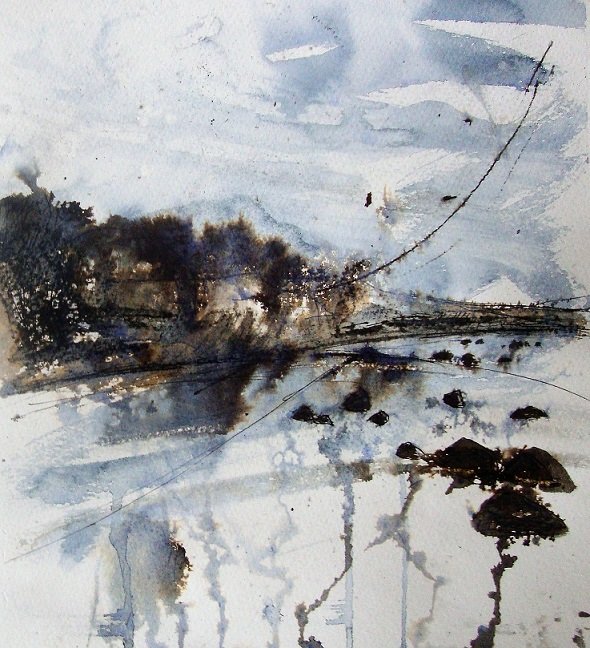
This morning along the shore
I could hear the waves coming in, not
see them, such was the bank of sea-mist hovering.
Thus, at the edge of dreams, do
promises and threats lie waiting,
and the cry of the gull out of nowhere.
*
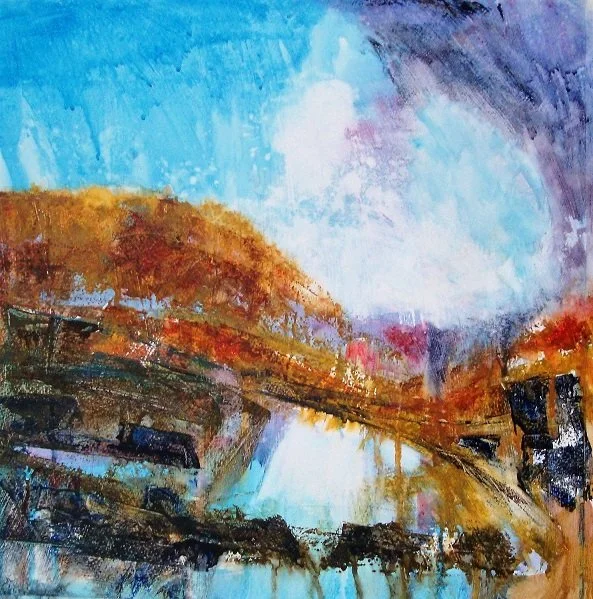
Sky Fall