A State of Mind
What is it that makes some people especially, even intensely, responsive to nature? For some, like William Wordsworth, it is to be ‘much favoured’ in their birthplace. He spent most of his life among the fells and valleys of the Lake District.:
‘Fair seed-time had my soul, and I grew up
Fostered alike by beauty and by fear.’
The beauty we can understand, but the fear? He relates an incident. One winter’s night the young boy is up in the hills setting snares to catch woodcocks:
‘Scudding away from snare to snare, I plied
My anxious visitation; — moon and stars
Were shining o’er my head. I was alone,
And seemed to be a trouble to the peace
That dwelt among them.’
And then he steals a bird already caught in another’s trap, and feels the fear:
‘….and when the deed was done
I heard among the solitary hills
Low breathings coming after me, and sounds
Of undistinguishable motion, steps
Almost as silent as the turf they trod.’
Well, the lad was young, sensitive and impressionable. He felt guilty and it was dark. On another occasion, again at night, he takes a boat out onto the lake. He makes headway and delights in the sensation:
‘ ……..lustily
I dipped my oars into the silent lake,
And, as I rose upon the stroke, my boat
Went heaving through the water like a swan.’
But as he progresses further out, ‘a huge peak, black and huge,’ hitherto unseen, hove into view ‘as if with voluntary power instinct’ and seems to come after him. Chastened, he returns the boat and goes home ‘in grave and serious mood.’
‘ …for many days, my brain
Worked with a dim and undetermined sense
Of unknown modes of being….
…..huge and mighty forms, that do not live
Like living men (which) moved slowly through the mind
By day, and were a trouble to my dreams.’
So we have to see the fear as part of his ‘fostering’, beyond the sheer beauty of nature and a necessary ingredient of its awesomeness, which informed Wordsworth’s personality and creative powers.
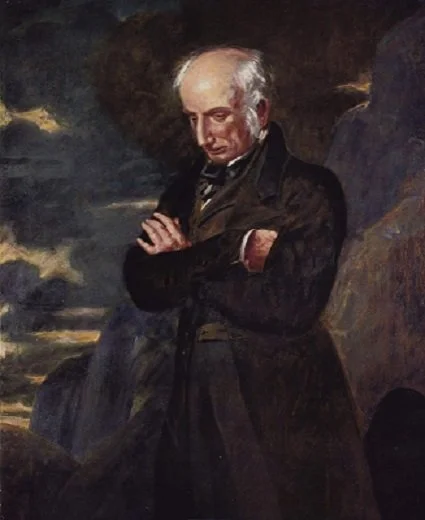
William Wordsworth (1770-1850)
*
For Gerard Manley Hopkins, nature in all its splendid intricacy was a manifestation of God, ‘The world is charged with the grandeur of God.’ And after a typically Romantic chastisement of leaden footed mankind for the ill effects of industry and urbanisation, he asserts
‘And for all this, nature is never spent;
There lives the dearest freshness deep down things.’
As with Wordsworth, there is something deeper in his response than sheer physical beauty, something ‘deep down’, a sort of force in the biological processes of Nature, an idea he suggests in ‘Spring’: ‘What is all this juice and all this joy?’ Whatever it is, Hopkins, a Jesuit priest, can trace it back to the Garden of Eden —
‘A strain of the earth’s sweet being in the beginning
In Eden garden.’
In perhaps his most ecstatic poem, ‘The Windhover’, the astonishing word-play in his picturing of the kestrel, the ‘dapple-dawn-drawn Falcon’, culminates in the breathtaking ‘stoop’ of the bird which action becomes a revelation of Christ, the poet’s ‘chevalier.’
‘Brute beauty and valour and act, oh, air, pride, plume here
Buckle! AND the fire that breaks from thee then, a billion
Times told lovelier, more dangerous, O my chevalier!’
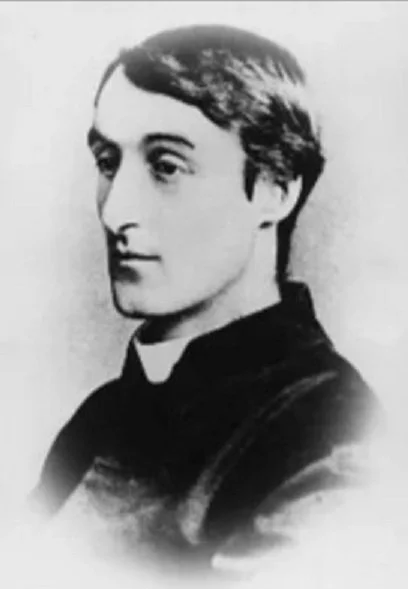
Gerard Manley Hopkins (1844-89)
*
Having neither the dramatic inspirations of Wordsworth’s childhood nor Hopkins’s supercharged religious fervour, I turn to Henry David Thoreau and his response to nature. He rephrases Hopkins’s ‘juice and joy’ thus, at the time he spent dwelling in a hut by Walden Pond in Massachusetts:
‘I enter a swamp as a sacred place — a ‘sancta sanctorum’ . There is the strength, the marrow of nature.’
Here is a recognition of the primal soup beloved of evolutionary biologists and ecologists which was and continues to be the laboratory from which all life emerges. And a recognition that we are part of it. ‘Man,’ says Thoreau, ‘is but a mass of thawing clay.’ So we humans and the natural world are involved in the same process in all its messy randomness. Describing the genetic, biological systems which produce the chaotic abundance and variety of life, the naturalist and writer, Richard Maybey, said, ‘A ceaseless, gratuitous, inventive bodging is what keeps the world going.’ That makes me feel at home.
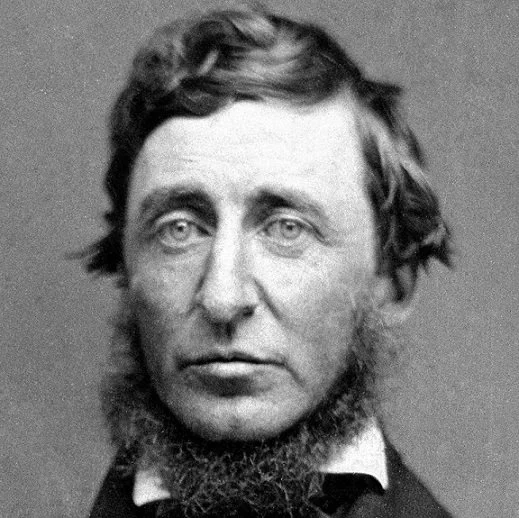
Henry David Thoreau (1817-62)
*
Of course, these ideas, these pronouncements about nature and our attempts to understand our response to it, are but conceits. Wordsworth’s hills, Hopkins’s kestrel, Thoreau’s swamp are completely unaware of our intellectual or imaginative designs on them. Nature does not have a ‘meaning’. It just is. It is we humans who have an itch for meaning — meaning and meanings out of which we try to construct our lives, to attempt to explain the universe, to create pictures and poetry, which is the least we can do.
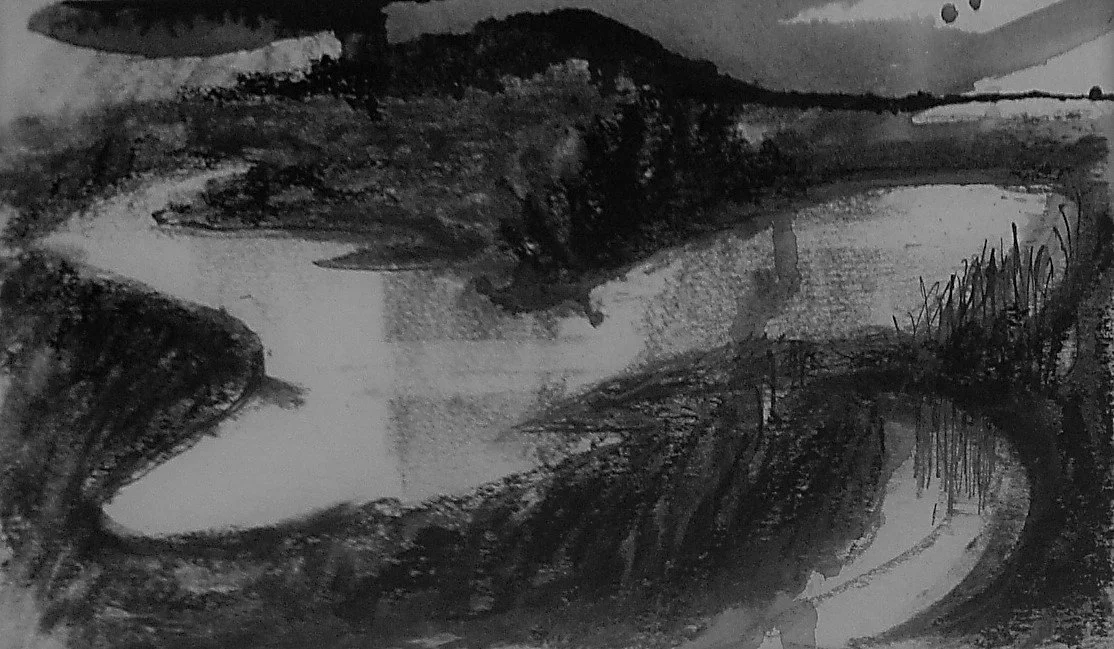
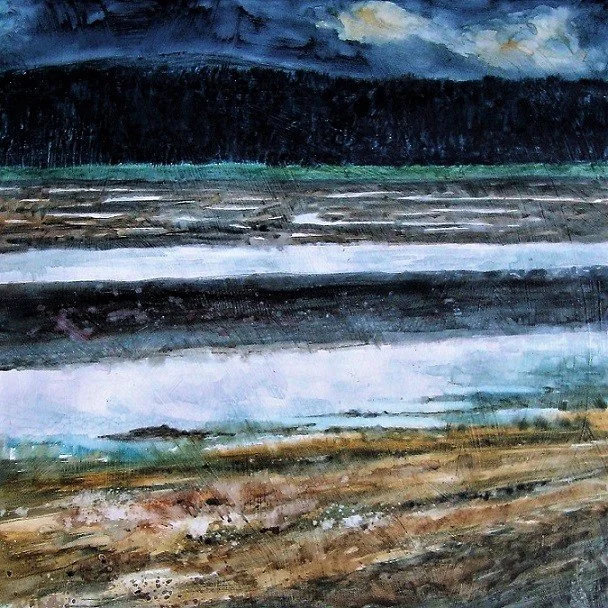
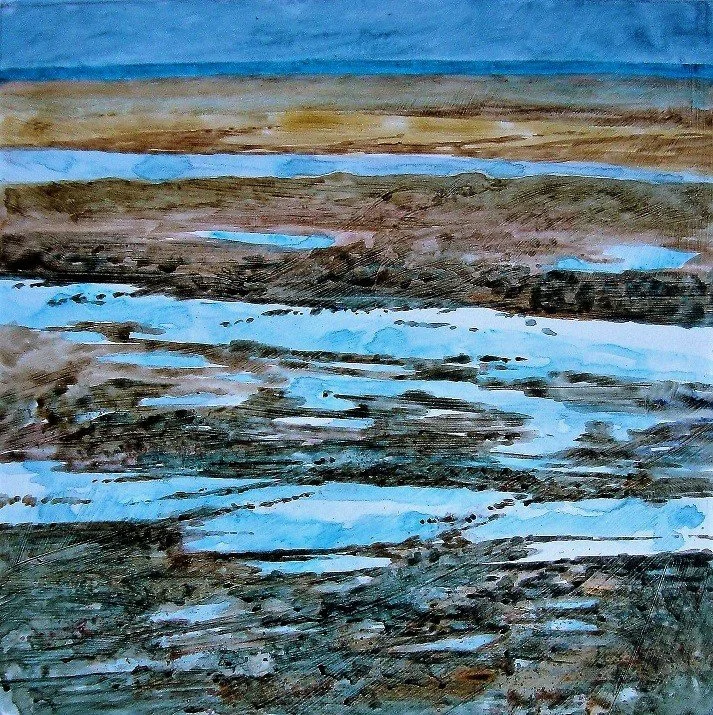
Salt Marsh
This lobe of the estuary
bay of silt scrawled
with pools and gullies
fills and empties like a lung
drowns twice a day when
the tide sidles in engulfs
then settles in a pane of sky…
and me standing on the edge
on spongy marsh-grass the tang
of wormwood and the curlew echoing,
I sense the mischief in it
watching the water wink as
it rises round my feet
and catches my reflection.
An insinuation….
nothing between us
the shifting surfaces our devious
windings furtive the way
we reshape ourselves
and indeed I would stay
with the salt marsh brimming
sucked into its secrets.
But wake to the peal of their wild cry….
that arrowhead of geese
clearing the air pressing north
*
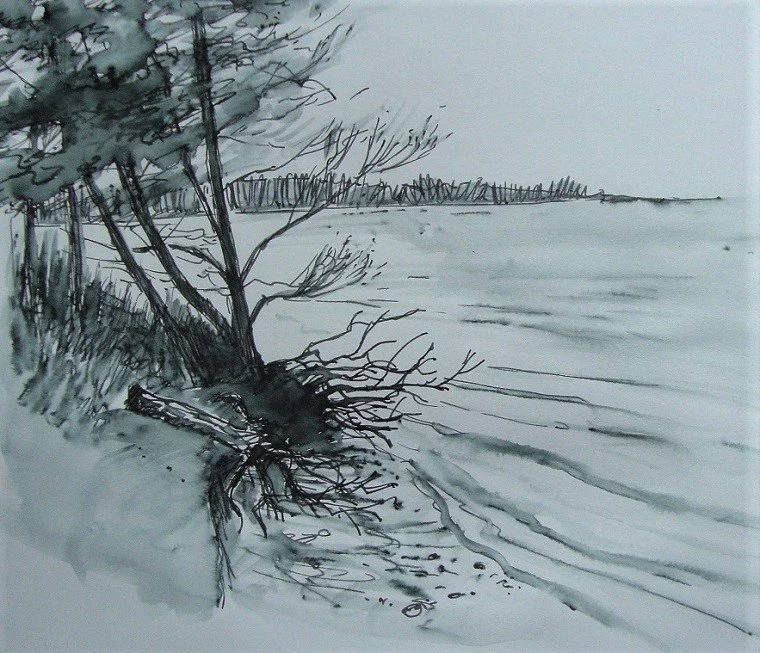
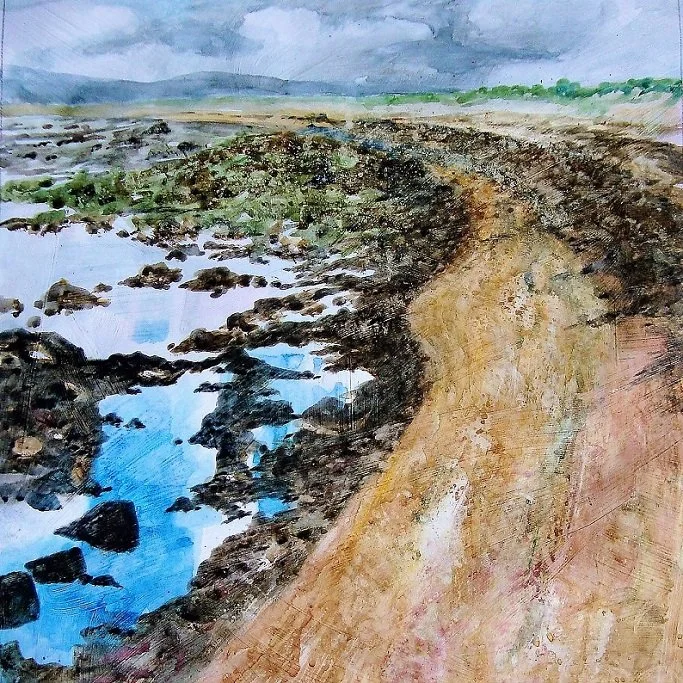
Uprooted
This tangle of roots and felled branches
clutching at air, the pine knocked back,
gale rocked, just holding on…
…there’s something indecent about it,
the way the tide, surgical as a crow, stabs
and probes and prises, eviscerating the low cliff,
exposing its entrails, exhuming its bones.
Caught here, though the tide’s
now sulking in the shallows, out of reach,
I zip my coat up, tighten my bootlaces.
There are things I cannot keep at bay.
They gust in on the salt wind
pealing through the hollows.