Ailsa's Leap
I do not often pay much attention to ‘Thought for the Day’, usually taking it as an opportunity to go and make my second cup of tea. A couple of mornings ago, though, I was struck by the words of the speaker, Jane Manfredi She was discussing the aftermath of Oprah Winfrey’s interview with Megan Markle — the predictably polarised reactions, the exposure of underlying prejudices. But the real question is not who is telling the truth but what is the truth? Beneath the flying feathers, Megan Markle remains a vulnerable human being with all the history and baggage that that entails. ‘Only I can say who I am and where I come from,’ concluded the speaker, waving a banner for individuality over convention, independence over tradition. The Queen’s attempt to offer judgement went only as far as ‘recollections may vary,’ which can be taken as either a doubting, however discreet, about Megan’s claims or simply a bit of diplomatic fudge.
But, albeit unwittingly, she is positioning herself not far from the speaker of ‘Thought for the Day’. Of course ‘recollections may vary’ and often do. To the amusement of my children and grandchildren, whenever my sisters and I recount our childhood experiences our recollections are often wildly different. Everything that happens to us soon becomes memory. Each of our individual memories is shaped by our own circumstances, our past, our unique personalities. We are constantly reinventing ourselves and our histories to create a more convenient or more comfortable narrative.
This is not the same as Donald Trump’s ‘fake news’, for example, or his campaign manager, Kellyanne Conway’s, ‘alternative facts,’ in other words, the deliberate manipulation of data, the airbrushing of history, which megalomaniacs and totalitarian regimes routinely employ to cement their power. Our ‘processing’ of facts is just what we humans do, how we calibrate experience to manage our lives and survive. ‘Only I can say who I am and where I come from.’
*
As Corrag says, ‘We all have our stories, and we speak of them, and weave them into other people’s stories — that’s how it goes, does it not?’
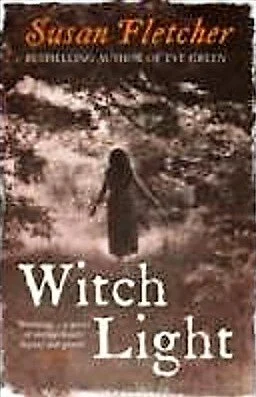
Corrag is a wild girl, imprisoned in Scotland for being a witch. As she awaits her doom she tells the story of her life which culminates in her involvement in the bloody horrors of the Glencoe Massacre in 1692. The story is told in the fine novel, ‘Witch Light’ by Susan Fletcher. Corrag’s near feral existence has made her intensely sensitive to the natural world in which she has spent her days:
‘Rocks and sky. They are small words. To say it was rocks and sky sounds like it wasn’t much. But it was. Rocks can have a thousand colours in them — grey, brown, purple-grey, dark-blue. They can have moss and lichen on their sides, and heather, and birch trees, and waterfalls, and marks where waterfalls have been….I put my hands upon a stone beneath the northern ridge, and felt it. It had an old warmth, and a wisdom. It was rough, like a tongue. And like all the skies I saw there, it was a blowing sky.’
Corrag, despite her wild ways, is shown to be an individual of great insight and integrity, with her own truth:
‘I think that maybe in our lives — in our scrabbling for food, in the washing of our bodies and the warming of them, in our small daily battles — we can forget our souls. We do not tend to them, as if they matter less. But I don’t think they matter less.’
But, of course, she remains an outcast, on the edge of normal life. Only she can say who she is and where she comes from.
*
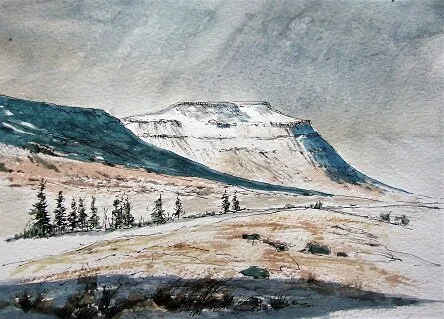
Reading Corrag’s story reminded me of a curious experience I had in the Lake District. I was campimg….Low Wray, was it, at the top of Windermere? One day, a fair summer’s day, I decided on Coniston — I would ascend the Old Man from the north, by way of Wetherlam and Swirl How. I drove to Tilberthwaite and set off, Yewdale Beck down to my right. I see it now, repainting it in my mind. Then the stepping stones, the approach to Wetherlam, the land pitted with old mines and levels opening to the past, until I found myself climbing the rocky ridge to the mountain top. Then a dip and the next ascent, up Prison band, to the wide summit of Swirl How. The exhilaration of the plateau, the panoramic view to all points of the compass, a symphony of fells and light and sky.
I strode along the airy ridge to Coniston Old Man. There ahead I saw the summit cairn aswarm with people who had come up directly from the village below. To this point I had not seen another soul. I gave them all a wide berth and descended, an uncomfortable drop through the loose rocks and shards of old mine workings. I arrived at the Miners Bridge, peered down to the brook below, Levers Water Beck, and went on down to the village. After a welcome pint I made my way back across the Yewdale Fells to Tilberthwaite.
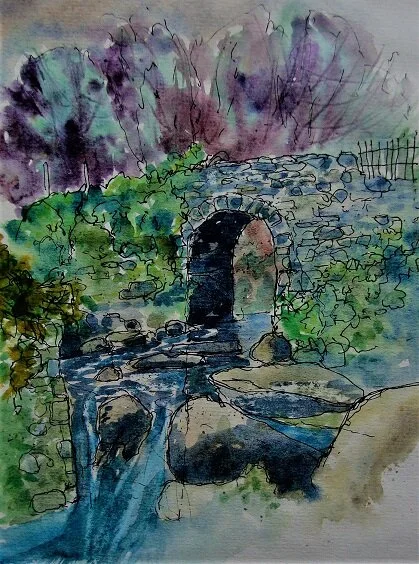
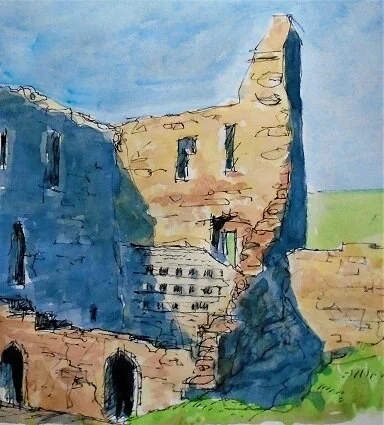
Miners Bridge
Why am I telling you this? It is because there has stuck in my mind a story, a legend I should think. It concerns a girl who leapt to her death from a bridge, a bridge which came to be known as Somebody-or-Other’s Leap. I always imagine the bridge as the Miners Bridge and associate the tale with my visit to Coniston that day. I have been back a few times since and have looked in bookshops, the Information Centre, the town museum, but have failed to find any reference to such a story. Have I not looked in the right places? Have I just imagined the whole thing? I don’t know and probably never will. But somehow the story evolved in my mind and I turned it into a poem, ‘Ailsa’s Leap’. I grant I gave her the name, Ailsa — originally from a Viking word which means ‘elf-power’. Is there any truth in the story? And if so, whose truth — Ailsa’s, mine? Where does truth end and fiction begin/ Or are they one and the same?
Ailsa’ Leap
I writhed into the world wrapped
in her wet red scream.
They put her under the rough earth
in a stony plot and shook me over her.
I would never cry they said, just animal
noises, and for my bleating
they set me on the fell with the sheep
and the wild sky and the owl at night.
They threw me crusts and windfalls.
The flocks mothered me and I picked
wool from thistles and made little lambs.
When I heard the woman in me
I found the village boy and drew him
one night to the bare ground.
I emptied him out and I led him
a dance down the mountain and
he howled when I spat at him.
But he put a bird in me.
I felt it fluttering till it froze
and under the thorn it fell from me
a block of black feathers
and it is still there in the roots.
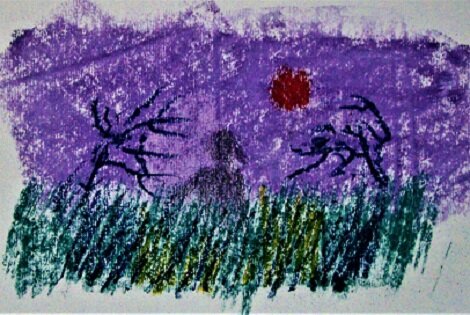
Sometimes I saw the sky turn purple
and thought it was bleeding
so I took to the fiery gorse.
The spines ripped me like joy it was
so fresh and the cry they heard
in the village was like no animal.
By twilight I went to the tall bridge
arching the torrent and stood on the edge.
How the long ache fell away when I leapt!
For my bones the stark slabs
below took my breath away
but my twisted angel flew
bucking into the startled air.
My name is in the teeth of the wind,
on the tip of the water’s tongue.
They come to this spot and stare,
their fingers trembling to touch
the crooked ‘A’ scratched
in a boy’s hand on the dark stone.